


Evolution of Electronic Equipment Cooling Technology

Electronic equipment cooling methods are broadly categorized into air cooling, water cooling (in-direct or direct liquid cooling), and immersion liquid cooling.
- Air cooling: Its simple structure and ease of maintenance have long made it popular in data centers and other locations. However, it suffers from low energy efficiency and has limitations in managing the heat generated by high-power equipment.
- Liquid cooling: Primarily used in electric vehicle batteries, it’s recently expanding into data center servers. Compared to air cooling, it offers higher energy efficiency and the ability to handle high-power heat generation. However, it suffers from structural limitations: only the part directly in contact with the cold plate through which the coolant flows is cooled.
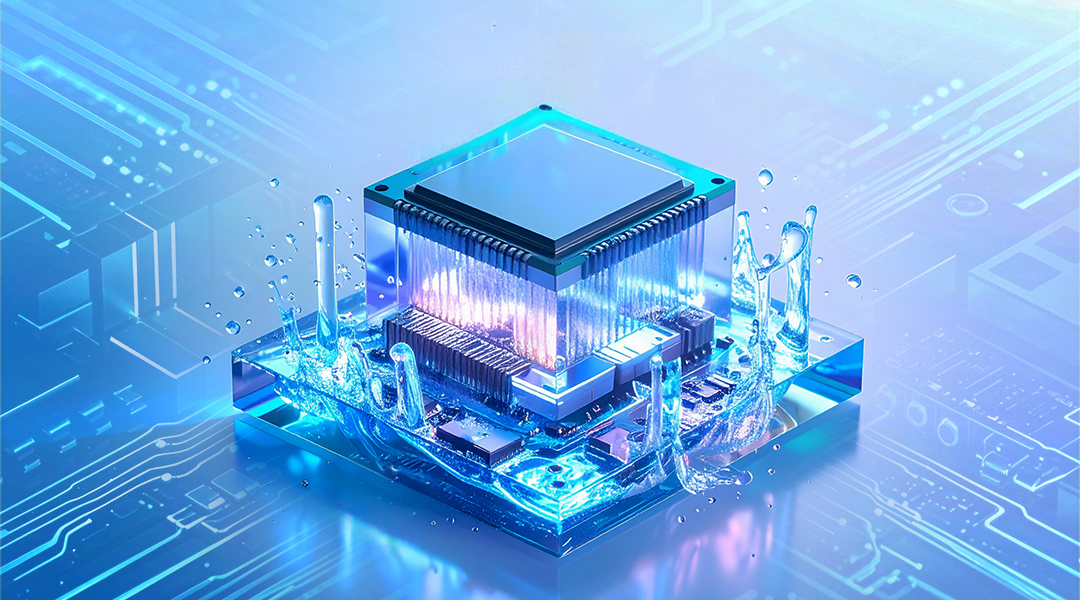
- Liquid immersion cooling: A method of cooling electronic equipment by immersing it in a non-conductive liquid. It has been attracting attention for several years as an alternative that can overcome the limitations of existing technologies.
Why Liquid Immersion Cooling is Gaining Attention as a Next-Generation Cooling Technology

The reason liquid immersion cooling is attracting attention is because it can solve structural challenges in two of the most promising industries these days: data centers and batteries, in a relatively simple way.
The International Energy Agency (IEA) estimates that data center power consumption will reach approximately 415 TWh in 2024, representing 1.5% of global power consumption. With the proliferation of AI driving a surge in demand for high-performance servers, this figure is expected to more than double to 945 TWh by 2030, with power supply and demand and heat management emerging as key challenges.
The battery industry faces the challenges of preventing rare but potentially fatal fire and explosion hazards, reducing the rapid charging time for electric vehicles from the current 30-60 minutes to less than 10 minutes, and improving battery life.
While solving these challenges typically requires long-term development and large-scale investment, liquid immersion cooling is a promising alternative that can be applied by modifying only a portion of existing server and battery systems, and its heat control effectiveness is evident.
However, the data center and battery industries require verification and reliability assessment before commercialization, requiring time for widespread adoption. Conversely, the cryptocurrency mining industry has rapidly adopted liquid immersion cooling to address heat, noise, and dust issues in environments similar to data centers, and its adoption in large-scale mining farms is on the rise.
Current Status of the Immersion Cooling Fluid Market and Major Companies

The issue of overheating in electronic equipment such as data center servers and batteries is clear, and liquid immersion cooling technology offers numerous advantages, including heat suppression, extended equipment life, and improved energy efficiency. However, market development remains uncertain due to the advancements and intensifying competition in existing air and water cooling technologies, the resurgence of fluorinated two-phase fluids, and the hybridization of cooling technologies.
However, even in this situation, the reason GS Caltex launched the first domestic immersion cooling oil, Kixx Immersion Fluid S, in 2023 is because it judged that once the market is fully formed, it would be virtually difficult for latecomers to enter the market.
Major overseas companies are making similar strategic decisions. Shell, a global energy and petrochemical company, invested in Asperitas, a Dutch startup specializing in immersion cooling, launched an immersion cooling fluid, and pursued collaborations with global companies in the data center and battery sectors. This has also influenced related companies in Korea. BP Castrol, a British energy and petrochemical giant, invested approximately $64 million to build an immersion cooling research facility and expanded collaborations with various global companies. In Korea, SK Enmove invested approximately $28 million in GRC, a US-based immersion cooling solutions company. Building on this investment, the company collaborated with global companies to conduct immersion cooling technology verification and joint development with its affiliates SK Telecom and SK On.
Why the Lubricants Industry Is Focusing on Liquid Immersion Cooling Technology

Major domestic and international lubricant companies have currently released or are developing liquid immersion cooling fluid products, and are expanding collaborations with related technology companies. This is because the widespread adoption of liquid immersion cooling technology will have a significant impact on the entire lubricant industry.
The lubricant industry previously perceived the spread of electric vehicles as its greatest risk. Engine oil is a key consumable for internal combustion engine vehicles, accounting for a significant portion of sales and profits. However, because electric vehicles do not require engine oil, many predicted that increased EV adoption would inevitably lead to a decline in sales.
Liquid immersion cooling technology offers a new opportunity to alleviate these concerns. It can replace the declining demand for engine oil due to the proliferation of electric vehicles and enter markets with high cooling needs, such as batteries and servers. For this reason, global lubricant companies are simultaneously pursuing technology development, product commercialization, and industry-specific partnerships.
Differentiating with the GS Caltex Kixx Immersion Fluid S Series
Since launching Kixx Immersion Fluid S for the first time in Korea, GS Caltex has expanded its product portfolio by developing and launching three additional types to meet diverse market demands.
The PAO (Poly Alpha Olefin)-based S5 and S30 are designed for a variety of operating environments with high energy efficiency and high flash points, while the synthetic ester-based SE and bio-based S BIO are products tailored to special purposes and environmentally friendly requirements.
All four types meet the standards of the U.S. Open Compute Project and are NSF certified and biodegradable, ensuring their environmental friendliness. This demonstrates their applicability in a variety of industries.
Because liquid immersion cooling technology is integrated with servers, batteries, and various electronic systems, it is crucial to collaborate with leading companies in each industry to verify its performance and stability in real-world environments.
GS Caltex is conducting this verification through collaboration with memory device, server, and data center operators, battery manufacturers, ESS and rapid charger companies, and related startups.
Liquid Immersion Cooling: Future Market and Industry Opportunities
Although liquid immersion cooling faces uncertainties in its market development, it is expected to offer a variety of benefits, including improved energy efficiency, extended equipment life, and reduced noise and installation space.
According to analysis by global market research firm Market.us, the liquid immersion cooling market is expected to grow at a compound annual growth rate (CAGR) of 18.3% from approximately $1.3 billion in 2024 to approximately $7.2 billion in 2034. Furthermore, global market research firm MarketsandMarkets forecasts that the global data center liquid cooling market will expand from approximately $2.84 billion in 2025 to approximately $21.14 billion in 2032. With heat management emerging as a key challenge for both the data center and battery industries, market demand is likely to steadily expand in the medium to long term.
GS Caltex, the first company in Korea to commercialize liquid immersion cooling fluids, is expanding its scope of collaboration to industries where heat management is crucial, such as data centers and batteries. Beyond simply supplying technology, GS Caltex is accelerating commercialization by working with partners to verify performance and stability in real-world operating environments.
Liquid immersion cooling presents a new growth opportunity to supplement the shrinking demand for engine oil due to the proliferation of electric vehicles. It also represents infrastructure that can directly contribute to power efficiency and equipment lifespan in the energy and electronic equipment sectors. Building on this potential, GS Caltex is creating a new axis for its lubricant business and preparing to lead future growth markets.